jueves, 14 de octubre de 2010

Виноградский, Сергей Николаевич

Серге́й Никола́евич Виногра́дский (1 (13) сентября 1856, Кие — 24 февраля 1953, Париж) — выдающийся русский микробиолог, основатель экологии микроорганизмов[1] и почвенной микробиологии.
Родился в Киеве в семье состоятельного юриста. По окончании в 1873 2-й Киевской гимназии поступил на юридический факультет Киевского университета. Однако уже через месяц перешёл на естественное отделение физико-математического факультета. Через 2 года не удовлетворенный занятиями он оставил университет и поступил в Петербургскую консерваторию в класс фортепиано, где получил музыкальное образование.

В ноябре 1877 поступает на второй курс естественного факультета Санкт-Петербургского университета. После окончания его в 1881 посвятил себя микробиологии и в 1885 уехал для дальнейшего обучения в Страсбург к Антону де Бари. В 1887—1888, работая в лаборатории де Бари впервые показал возможность получения энергии за счет окисления сероводорода и использования её для ассимиляции углекислого газа, открыв таким образом хемосинтез (осуществляющие этот процесс организмы он назвал аноргоксиданты). До этого единственными автотрофными организмами считались фотосинтезирующие растения, поэтому данные работы обеспечили Виноградскому мировое признание.

После смерти де Бари в 1888 Виноградский продолжил работу в институте гигиены университета в Цюрихе. Здесь он подтвердил наблюдения Уорингтона о том что процесс нитрификации идет в две стадии и выделил культуры бактерий-нитрификаторов. Развивая идеи хемосинтеза, доказал что углерод для строения клеточного вещества может быть получен только фиксацией углекислого газа.

Несмотря на многочисленные предложения остаться в Цюрихе или переехать в Париж, в 1899 Виноградский вернулся в Санкт-Петербург, где работал в институте экспериментальной медицины.

В 1902 получил докторскую степень и с этого времени по 1905 был директором института. Здесь он занимается изучением опасных инфекций, в частности чумы. Его помощником был Д. К. Заболотный, ставший впоследствии основоположником отечественной эпидемиологии.
В 1905 по состоянию здоровья покидает институт и переезжает из сырого Петербурга в Городок, Каменец-Подольской губернии, где обращается к проблемам земледелия и почвоведения.

После революции 1917 уехал сначала в Швейцарию, а затем в Белград, где написал книгу «Железобактерии как аноргоксиданты». В 1922 по предложению Эмиля Ру, директора института Пастера, создал при институте отдел сельскохозяйственной биологии (другой вариант перевода: агробактериологии) в Бри-Колет-Робер недалеко от Парижа, которым руководил до самой смерти.

В 1923 стал почетным членом Российской АН. Это был единственный в её истории случай избрания эмигранта.
Изучая почвенное микробное сообщество разделил всех живущих в ней микроорганизмов на автохтонные (типичные, встречающиеся всегда) и аллохтонные (зимогенные) (развитие которых связано с увеличением концентрации органического вещества). Это деление оказалось применимым для большинства экосистем. Изучал разложение целлюлозы и цикл азота. В 1949 на французском языке вышла его книга «Микробиология почвы, проблемы и методы», в 1952 в СССР издан её перевод на русский

Файл:Nitrogen Cycle.jpg

miércoles, 13 de octubre de 2010

Tereshkova


Tereshkova, Valentina Vladimirovna (1937-) Russian cosmonaut. First woman in space, aboard Vostok 6. But the flight was propaganda and future spaceflight opportunities did not develop. Was married to cosmonaut Andrian Nikolayev. Later a leading Communist politician.

Tereshkova was born and raised in Maslennikovo, a small town in the Yaroslavl Region. Her family included a younger brother, Vladimir, and an older sister. Her father, a tractor driver, Vladimir Aksyenovich Tereshkov, went missing in action in the Finno-Russian War of 1939-1940. Her mother, Elena Fedorovna, a worker in a textile plant, was left to raise the three children on her own.
 
Tereshkova did not begin school until age eight, at the end of the war. But at 17 she had to leave school and begin working at the textile plant in order to help support the family. But she was ambitious, and wanted more from life. She continued her education by correspondence course and learned sky diving through the DOSAAF Aviation Club in Yaroslavl, an auxiliary organization of the Soviet Air Force. Tereshkova made her first jump on 21 May 1959. Thereafter she set up the Textile Mill Workers Parachute Club and became its first head. Two years later she became secretary of the local Komsomol (Young Communist League) and had earned certification as a cotton-spinning technology expert. A month after her 24th birthday, in April 1961, the Soviet Union launched the first man into space - Yuri Gagarin aboard the Vostok-1 spacecraft.
Cosmonaut chief Kamanin had brought up the concept of a female spaceflight to the Soviet Air Force and Chief Designer Korolev immediately after Gagarin's flight. He believed it was their patriotic duty to beat the Americans in putting a woman in space. He wanted to find a female cosmonaut who would be a dedicated Communist agitator in the same class as Gagarin or Titov. Korolev agreed, and in October 1961 included a requirement for five women among the 50 new cosmonauts he wanted recruited for his ambitious new space plans.
 
Piloting experience was not necessary, since the Vostok was completely automatic and the occupant was considered a mere passenger. However parachuting experience was essential, since the Vostok cosmonaut was ejected clear of the capsule after re-entry and landed on earth under a personal parachute. So the qualifications were: females under 30 years of age; under 170 cm tall; under 70 kg in weight; physically fit; ideologically pure; who had completed parachute training of at least five to six months duration. Cosmonaut chief Kamanin was one of the founders of DOSAAF, so it was logical to search for 'likable girls' with parachuting experience in the Soviet Union's aero clubs. A review of DOSAAF dossiers indicated there were 58 potential candidates, of which 40 passed the paper review and were called to Moscow for interviews and physical examinations in January 1962.
 
Tereshkova met the requirements, and the only fleck on her record was the fact that her father was MIA as opposed to KIA. This raised the remote possibility he had deserted or fled. However her credentials as a Komsomol leader got her over this hurdle, and Tereshkova was one of five women selected as cosmonaut-candidates on 16 February 1962. She was the least qualified of the candidates selected, with no higher education. The other four women included test pilots, world-class parachutists, and engineers.
 
All five underwent the complete course of training, including weightless flights, parachute jumps, isolation tests, and centrifuge tests. At the beginning Kamanin found Solovyova, Tereshkova, and Kuznetsova to be the leading candidates for the first female flight. While Tereshkova excelled in the physical training, she had more difficulty with rocket theory and spacecraft engineering. The women then entered follow-on training included 120 parachute jumps and pilot training in MiG-15UTI jet trainers. They were commissioned as lieutenants in the Soviet Air Force. During this period Tereshkova also became a full member of the Communist Party of the Soviet Union.
 
In May 1962 a Soviet delegation, including cosmonaut Gherman Titov and Kamanin, visited Washington. Kamanin and Titov were invited to a barbecue at the home of astronaut John Glenn. Glenn, already politically-connected, was an enthusiastic supporter of the 'Mercury 13' - female pilots who had passed the astronaut physical and were lobbying to be trained as Mercury astronauts. Kamanin understood from Glenn that the first American woman would make a three-orbit Mercury flight by the end of 1962. Armed with the threat that 'the Americans will beat us', Kamanin was able to obtain a decision to go ahead with the first flight of a Soviet woman within weeks of his return - and not just one woman. In August 1962 the Soviets pulled off the first dual manned spaceflight, with Vostok 3 and 4 orbiting in space together, each carrying a Soviet man. Kamanin proposed that Vostok 5 and 6 should orbit two women simultaneously in the following spring. This became the official plan for the 1963 spaceflight series.
On 19 November 1962 selection for the flights took place. Ponomaryova and Tereshkova were the final candidates - but who would be the first Soviet woman in space? Ponomaryova had the best test results, but did not give 'proper' replies in the interviews with the puritanical Communist selection board. When asked 'What do you want from life?' she replied, 'I want to take everything it can offer'. Tereshkova, on the other hand, intoned 'I want to support irrevocably the Komsomol and Communist Party'. Ponomaryova also maintained that a woman could smoke and still be a decent person, and had made 'scandalous' trips unescorted into the town of Fedosiya while there for parachute training.
 
This dual female flight plan was approved all the way up the Soviet hierarchy until it was killed at the last moment at a meeting of the Presidium of the Communist Party on 21 March 1963 by party ideologue Kozlov and Ministry of Defense Chief Ustinov. Only one female would be allowed to fly for propaganda purposes. A male cosmonaut (Bykovsky) was rushed into final training for Vostok 5, delaying the dual flights for two months.
Korolev proposed Tereshkova for Vostok 6, on the grounds that she was less qualified than Ponomaryova. He planned to fly two women aboard a multiple-crew version of the Vostok, the Voskhod. This would be a much more complex mission, involving space piloting skills and a spacewalk by one of the cosmonauts. For this mission Korolev would need a commander with the skills of Ponomaryova, and a spacewalker with the courage and strength of Solovyova. So Tereshkova, the less skilled of the three, was his choice for the 'spam in the can' Vostok mission.
 
But it was Premier Khrushchev himself who made the final crew selection. Tereshkova embodied the qualities expected of the New Soviet Woman. She was a reliable communist, a factory worker from a humble background, and a 'good' girl. Most importantly, she had the looks, charm, and attitude necessary for celebrity - Kamanin would later call her 'Gagarin in a skirt'.
The correct propaganda tone had to be set. The female cosmonauts arrived at the cosmodrome for the flight in their military uniforms, but had to go back into the aircraft and change into civilian skirts and blouses for the filming of their arrival.
On June 14, 1963, Vostok 5 was launched with Bykovsky aboard. Two days later, Tereshkova became the first woman in space aboard Vostok 6, with the call sign 'Chaika' (Seagull). There were problems during the flight, unrevealed at the time, but discussed in the memoirs of Kamanin, Korolev, and Mishin published after the fall of the Soviet Union. However Tereshkova did not reveal her side of the story - what really happened - until 2007.
 
It was said originally that Korolev was unhappy with Tereshkova's performance in orbit and she was not permitted to take manual control of the spacecraft as had been planned. Mishin later claimed she was 'on the edge of psychological instability'. Kamanin reports in his diaries that one official tried to insert a paragraph in the official press release about Tereshkova's poor emotional state while in space. The sentence claimed she experienced overwhelming emotions, tiredness, and a sharply reduced ability to work and complete all of her assigned tasks. Kamanin disagreed, saying this exaggerated her difficulties during the flight. She only had tasks assigned for the first day. When the flight was extended for a second, and then a third day, there was essentially nothing for her to do. The ground command did nothing to support her during those additional days. She certainly was never tired, never objected, but rather did all she could to complete fully the flight program.
 
Tereshkova's version was that the automatic orientation system of her Vostok capsule was incorrectly set up. She noticed immediately on orbit insertion that her capsule was oriented 90 degrees from the intended direction, which meant that if retrofire was initiated, she would be sent to her death in a higher orbit rather than braked for a return to the earth's atmosphere. She advised a disbelieving ground control team of this. They finally verified it and sent signals to the spacecraft on the second day in orbit to correct the problem. It seems that clearing up this problem may have been what delayed her return to earth.
It was true she threw up in space, and it was said that Korolev wanted to bring her down early because of this. But Tereshkova has reaffirmed that this was not due to space-sickness but rather the poor quality of the space food she had been provided with. The black bread was much too dry. So she ate the few items she found palatable. She was ordered to remain strapped to her seat, evidently to combat her supposed space-sickness, but she developed a cramp in her right shin on the second day. This did not go away and became intolerable painful by the third day. To this was added a sore pressure point where the ring of her helmet pressed on her shoulder, and an itch that could not be scratched as a rash developed under one of the biomedical sensors.
 
After being ejected from the capsule, Tereshkova saw to her horror that she was heading for a splashdown in a large lake. Exhausted, dehydrated, and hungry, she doubted she would have had the strength to swim to shore. However a high wind blew her over the shore, but also resulted in a heavy landing. She hit her nose on her helmet, making a dark blue bruise. Heavy makeup was needed for the public appearances that followed. She worried that the makeup would conflict with her pure worker girl image.
Whatever the case, Tereshkova had completed three days in space aboard Vostok 6, more than the flight time of all the American astronauts put together. Bykovsky's Vostok 5 had been planned for a record eight days in space, but Bykovsky had trouble with his thermal regulation system and ended up landing after five days, only three hours after Vostok 6.
After her flights certain elements in the Soviet Air Force attempted to discredit her. There were charges that she was drunk when she reported to the launch pad, and that she was insubordinate in orbit, disregarding direct orders from the Center. Evidently they thought she should have accepted death from the incorrect spacecraft orientation rather than embarrass any managers on the ground. In the September after the flight, the militia claimed that Tereshkova was drunk and created a scandal with a militia officer in Gorkiy. She categorically denied being drunk, admitted to having a confrontation with a militia captain. Kamanin defended her against all of these attacks, and in the end it was Tereshkova's opponents who were dismissed.
During the summer of 1963 a joke began circulating that she should marry Andrian Nikolayev, the only bachelor cosmonaut to have flown. Tereshkova revealed in 2007 that she and Nikolayev, both of similar peasant backgrounds, were already attracted to each other before the flight. It was simply untrue, as was the later conventional wisdom, that they disliked each other. Whatever the case, the rumor of their love affair eventually reached Khrushchev. He thought it would be a great idea for them to marry and began applying pressure through Kamanin. They gave in and the marriage ceremony took place on 3 November 1963, at the Moscow Wedding Palace. The wedding party was held at a governmental mansion set apart for state receptions. Khrushchev himself presided, with top government and space program leaders attending.
On 8 June 1964, Tereshkova gave birth to a daughter, Elena Andrianovna, who later went on to become a physician. But the marriage was not happy - Khrushchev’s "space family" fell apart within a few years. Nikolayev was a gruff Chuvash, who had time for his male friends and little for his wife. Kamanin was having to constantly contend with disputes. However, as was the case with the American astronauts of this era, to divorce would mean the end of their careers. The couple remained together.
Tereshkova and her fellow female cosmonauts were not truly integrated into the cosmonaut detachment and considered for flight assignments on an equal basis with the 'regular' male cosmonauts. Throughout the Soviet period flights of women into space were considered only for propaganda purposes. Furthermore, since the number of flight slots was always smaller than the pool of cosmonauts, any woman who flew into space was taking the place of a man. The all-female Voskhod flight was canceled, at first under pressure from Gagarin and the other male cosmonauts, finally in order to concentrate on development of the Soyuz spacecraft.
Tereshkova obtained a graduate level engineering education at the Zhukovskiy Military Air Academy from 1964 to 1969. After her graduation, in October 1969, the female cosmonaut detachment was disbanded. Tereshkova was pushed into a hectic life as a prominent Communist politician and international representative.
 
It was only in the late 1970's, with impending flights by American women on the space shuttle, that the Soviet government again recruited a new group of woman cosmonauts. Tereshkova hoped to fly again, and submitted herself to review by a medical commission in 1978. It was during these reviews that she met Yuliy Shaposhnikov, a physician working at a military medical academy. The couple fell in love, and Tereshkova separated from Nikolayev in 1979. Tereshkova was told she had not passed the tests and would not be allowed to fly in space again. She applied for divorce from Nikolayev, but it required the personal permission of Soviet Premier Brezhnev, which only came in 1982.
 
Tereshkova and Shaposhnikov lived happily together for twenty years until his death in 1999. Tereshkova's image in these years was of a prim, perfectly coifed, but cold and iron-willed Communist apparatchik. But she personally felt that all of the party obligations were an unfair burden. She was not compensated for the work, but rather continued on the payroll of the cosmonaut center. All the while she still dreamed of returning to space, particularly being part of the first expedition to Mars. This dream of getting to Mars was shared among the first cosmonauts. Some were even willing to go on a one-way mission, including Tereshkova. Furthermore, although called the 'iron lady' by some, the constant good works Tereshkova accomplished revealed her true soul. These ranged from incessant assistance to citizens with problems, to personally supporting several orphanages.
 
During Soviet times Tereshkova was a prominent member of the Communist Party and a representative of the Soviet government to numerous international women’s organizations and events. She was a member of the World Peace Council in 1966; a member of the Yaroslavl Supreme Soviet in 1967; a member of the council of the Union of the Supreme Soviet in 1966-1970 and 1970-1974. She was elected to the presidium of the Supreme Soviet in 1974. She was the Soviet representative to the UN Conference for the International Women’s Year in Mexico City in 1975. Through the 1980's she continued as a Deputy to the Supreme Soviet , Vice President of the International Women's Federation; and several other international positions.
Svetlana Savitskaya became the second Russian woman in space in 1982, and the first woman to walk in space in 1984. A planned all-female Soyuz flight, planned for Soyuz T-15 on International Women’s Day in 1985, was canceled due to problems with the Salyut 7 space station. Only after the fall of the Soviet Union would Russian women begin flying to the Mir and ISS space stations as regular crew members, not as propaganda objects.
After the death of her life companion, Tereshkova retired to a small brick dacha on the outskirts of Star City. The house was topped with a seagull weathervane, commemorating the call sign of her flight in space. She enjoyed visits from friends developed over a long and full life, and from her daughter, and grandsons Andrei and Aleksei.
 
As memories she had the many medals and distinctions she received, including two Orders of Lenin; recognition as a Hero of the Soviet Union; the United Nation Gold Medal of Peace; the Simba International Women's Movement Award; and the Joliot-Curie Gold Medal.
Detachment: TsPK-Fc. Departed Date: 1997-04-30. Marital Status: widowed. Children: One child. Childhood: Daughter of a tractor driver who went missing in action in the Finno-Russian War of 1939-1940. Her mother, a textile worker, had to raise her three children on her own.. Education: Zhukovsky.
AKA: Tereshkova, Valentina Vladimirovna.
Location: Maslennikovo, Yaroslavl.

Los niños de la Guerra - Guerra Civil Española (1936-1939)

  
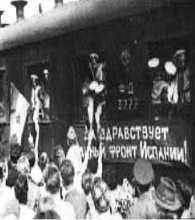
  La primera expedición de niños a la Unión Soviética partió del puerto de Valencia el 21 de marzo de 1937, en el mercante Cabo de Palos, con 72 niños procedentes en su mayoría de Madrid y Valencia, con destino al puerto de Yalta. Fueron llevados a un campamento en la localidad de Artek, en Crimea, a orillas del Mar Negro. En el mes de agosto se les trasladó hasta Moscú, donde ya estaba preparada la primera casa que albergaría a los pequeños españoles.

  Una segunda expedición salió del puerto de Santurce (Bilbao) el 13 de junio de 1937, en el trasatlántico Habanacon alrededor de 4.500 niños a bordo. A su llegada a Burdeos, un grupo de 1.495 niños fueron trasladados a otro barco, el buque francés Sontay con destino a la URSS, al puerto de Leningrado.

  La tercera expedición salió del puerto de El Musel (Gijón) el 24 de septiembre de 1937 con 1.100 niños, y que tras varias escalas y cambios de barco, llegó el grupo al puerto de Leningrado, el 4 de octubre de 1937, en los barcos soviéticos Kooperatsia y el Félix Dzerzhisky.

  La última expedición partió de Barcelona a finales del mes de octubre del año 1938, y se organizó con niños llegados a la Ciudad Condal desde distintos puntos de Aragón y de la zona mediterránea. Cruzaron la frontera pirenaica en autobús y una vez en territorio galo fueron conducidos en tren al puerto de El Havre, en donde les esperaban dos buques soviéticos: el Marya Uliianova, que transportó a 74 niños hasta Leningrado, y el Félix Dzerzhisky, que llevó a otros 117 niños hasta esa misma ciudad.

martes, 12 de octubre de 2010

Operación Zitadelle - Batalla de Kursk (5-7-1943)


Después de Stalingrado, el Ejército Rojo hizo retroceder a las fuerzas alemanas en todo el Frente del Este.  En el Alto Mando alemán, el Oberkommando der Wehrmacht (OKW), estaban conscientes de la gravedad de la situación que en esos momentos enfrentaban, pero los comandantes de los ejércitos en el Frente del Este, fueron capaces de realizar un repliegue ordenado que finalmente logró estabilizar el frente.  En esos momentos, los Aliados estaban a punto de invadir Italia, a Hitler no le cabía ninguna duda que los italianos se rendirían y cuando eso ocurriera la invasión de Francia no se haría esperar mucho tiempo.  Mantener tres frentes significaba extraer tropas del Frente del Este para poder intentar la resistencia en los otros dos.  La única forma de paliar la situación, era asestar un gran golpe a los soviéticos para aliviar la presión que el Ejército Rojo ejercía sobre la Wehrmacht.


La última victoria alemana había ocurrido en Izyum durante la primavera de 1942 cuando lograron encerrar a los soviéticos.  Algo similar había que hacer en esos momentos y Kursk era el lugar indicado porque cuando se estabilizó le frente, las fuerzas soviéticas habían tomado la ciudad y penetrado en territorio ocupado por los alemanes creando una protuberancia desde donde podrían partir ataques que encerrarían las fuerzas del Grupo de Ejércitos Centro en Orel y las del Grupo de Ejércitos Sur en Jarkov.
El plan, llamado Operación Zitadelle, era sencillo.  El Grupo de Ejércitos Centro de von Kluge, debería enviar al 9no Ejército al mando de Model con 800 tanques y penetraría desde el norte para encontrarse con el Grupo de Ejércitos Sur de Manstein, que con los 1200 Panzers del 4to Ejército Panzer de Hoth, irrumpiría desde el sur para encontrarse en Kursk la cual sería rodeada y posteriormente ocupada por esa enorme oleada de Panzers más el 2do Ejército que atacaría desde el oeste entre Sesk y Korenevo.  Para el Alto Mando Alemán era imposible que el Ejército Rojo pudiera resistir la potencia 50 divisiones de la Wehrmacht y SS, 2000 Panzers atacando en forma de pinzas y 7 divisiones de infantería, más todo el poder de 1800 aviones de la Luftwaffe en la zona y 1000 cañones haciendo el resto.  La sorpresa era importante, porque si los rusos atacaban en dos direcciones desde la protuberancia de Kursk podría obtener mucho territorio de manera rápida.  Por tanto, para que la más grande concentración de fuerzas alemanas, incluso mayor que al comenzar la Operación Barbarossa, pudiera tener éxito debía actuar rápidamente.


Pero lo que no sabían en el OKW, era que los soviéticos estaban al tanto de la ofensiva que se estaba planificando.  En Suiza, los servicios secretos transmitían a los Aliados los informes que el Círculo de Lucy obtenía en el propio Berlín.  En Moscú, la Stavka ordenó al Mariscal Zhukov prepararse a recibir a los alemanes quien planificó su defensa con 8 líneas antitanque en las que sembraron cientos de miles de minas, desplegaron 20 mil cañones, 6 mil cañones antitanque y 1000 lanzacohetes.  El plan soviético consistía en que los alemanes se desgastaran tratando de vencer esas defensas para contraatacar con 75 divisiones, 3500 tanques y 3 mil aviones.   El sector norte estaba al mando del General Rokossovsky y el sector sur al mando del General Nikolai Voronehz.  Gracias a Lucy, los soviéticos incluso estaban enterados de la nueva táctica alemana llamada "Panzerkeile" de atacar en grupos formando cuñas con los tanques pesados (Tigers y Ferdinands) al frente, seguidos por los tanques medianos (Panthers y PzKw IV) y los más débiles (Panzer III) detrás.  De esta forma esperaban penetrar en territorio enemigo rápidamente y consolidarlo mientras llegaban los refuerzos para asegurar la zona.
Los alemanes tenían preparado hasta el último detalle.  Hitler probablemente sentía temor de fracasar y dudaba retrasando el ataque por cualquier detalle insignificante aduciendo que era necesario no dejar nada al azar.  Los generales se desesperaban y acudían diariamente donde Hitler esperando que diera la luz verde para comenzar la operación, pero siempre encontraba algún argumento para continuar postergando el ataque.  Pasaron los meses de abril, mayo y junio y la orden no era dada.  Los soviéticos seguían perfeccionando su plan de defensa de acuerdo a los informes recibidos de Suiza.
Finalmente, el 5 de julio Hitler dio la esperada orden, pero al mismo tiempo que los alemanes comenzaban el bombardeo preparatorio con sus 1000 cañones, los rusos sorprendieron a los alemanes que quedaron atolondrados por el sorpresivo bombardeo recíproco de sus líneas, justo antes de comenzar el ataque.   Lo que debía convertirse en una victoria rápida y fulgurante se empantanó desde el comienzo y a los 2 días del inicio de la operación las fuerzas alemanas apenas habían penetrado 11 kilómetros dentro de la protuberancia.
Los rusos estaban esperando a los alemanes y atacaban a los Panzers medianos y a los blindados dejando a los Tigres y Ferdinands sin protección.  Los Tigres daban cuenta fácil de un T-34, pero sin infantería y sin los blindados no podían avanzar como lo habían planificado.   A pesar de eso, Hoth logró hacer avances importantes que preocuparon a los mandos rusos quienes se vieron en la necesidad de llamar a las reservas.   Para el día 9 de julio, las divisiones alemanas en el sur habían penetrado 32 kilómetros con grandes pérdidas.  Tres días después Zhukov ordenaba pasar a la ofensiva en el norte.
El 13 de julio, la más grande batalla de tanques de la historia con la participación de 1500 tanques.  Los Panzers se enfrentaban a los T-34 rusos y Lee estadounidenses en un combate apocalíptico bajo el inclemente sol del verano en la estepa rusa cuya temperatura sobrepasaba los 45°C.  Los tanques se enfrentaban a corta distancia causando bajas enormes en ambos bandos.  Los alemanes llamaron a este episodio la Batalla Todesritt o Cabalgata de la Muerte.
El Panzerkeile fue una catástrofe incalculable porque los rusos dividieron a la infantería y los acorazados destruyendo primero a los más débiles.  Sin el apoyo necesario los Tigres y Ferdinads fueron luego cazados uno a uno, sin importar el costo.  Las pérdidas en ambos bandos fueron enormes y Hitler decidió que estando la situación en Italia como estaba, era mejor mover 16 divisiones al sur, pese a que Manstein le prometía una victoria y estaba casi a punto de lograrlo.  Pero el 10 de julio había caído Sicilia y la defección de Italia era inminente.  El 25 de julio fue cancelada la Operación Zitadelle y los refuerzos comenzaron a marchar a Italia para reemplazar a las fuerzas italianas.  Por su parte los rusos habían iniciado la ofensiva que culminaría el 18 de agosto en el norte, al replegarse los alemanes a la Línea Hagen y en el sur el 23 de agosto, con la ocupación desde la ciudad de Jarkov hasta el río Psiol.
Alemania perdió 100 mil hombres, 1000 tanques y 1000 aviones.  Además, Franco retiraba a la División Azul del Frente del Este para permanecer manifiestamente neutral por el resto de la guerra.  Además despidió a los agentes alemanes de España, pero manteniendo las relaciones y el intercambio de suministros.  A partir de entonces, las fuerzas alemanas no serían capaces de montar una nueva ofensiva en el Frente del Este


bibliografía: The Battle of Kursk: Operation Citadel 1943 (Paperback) por Robin Cross

lunes, 11 de octubre de 2010

Валенти́на Влади́мировна Терешко́ва (Valentina Tereshkova)


Валенти́на Влади́мировна Терешко́ва (Valentina Tereshkova).El 16 de junio de 1963 la última cosmonave tripulada de la serie Vostok, la Vostok 6, despegó llevando consigo la primera cosmonauta del mundo, Valentina Tereshkova.

Este era un vuelo conjunto con la nave Vostok 5, pilotada por Valeri Bikovski. Durante esta misión se realizaron investigaciones médico-biológicas, se validaron y analizaron asuntos relativos al desarrollo de los sistemas de las naves. También fue durante esta misión que el problema de la alimentación de los cosmonautas fue resuelto satisfactoriamente.

Nacida el 6 de marzo de 1937), cosmonauta soviética, fue la primera mujer de la historia en viajar al espacio, a bordo del Vostok 6 en 1963.

Nació en Máslennikovo, un pequeño pueblo del óblast de Yaroslav, en la actual Rusia. Tras abandonar la escuela, trabajó en una fábrica de neumáticos y más tarde estudió ingeniería. También practicó paracaidismo. En 1962 fue seleccionada para su ingreso en el cuerpo femenino de cosmonautas. De entre más de cuatrocientas candidatas, cinco fueron seleccionadas: Tatiana Kuznetsova, Irina Soloviova, Zhanna Yérkina, Valentina Ponomariova, y Tereshkova.

El 16 de junio de 1963, a la edad de 26 años y a bordo del Vostok 6, se convirtió en la primera mujer en viajar al espacio. Su nombre en clave durante la misión fue Chaika (gaviota en castellano, Чайка en ruso). Serguéi Koroliov estaba descontento con el comportamiento de Tereshkova en órbita y no se le permitió tomar el control manual de la nave, tal y como estaba planeado. Aunque estaban previstos más vuelos en los que participaran mujeres, pasaron 19 años hasta que otra mujer, Svetlana Savítskaya, viajara al espacio. Ninguna de las otras cuatro cosmonautas del grupo de Tereshkova viajó al espacio.

Tras la misión espacial estudió en la Academia de la Fuerza Aérea de Zhukovski, y se graduó como ingeniera espacial en 1969. Ese mismo año, el grupo de cosmonautas femenino fue disuelto. En 1977 recibió el doctorado en ingeniería. Debido a su prominencia desempeñó diversos cargos políticos: de 1966 a 1974 fue miembro del Soviet Supremo, de 1974 a 1989 formó parte del Presidium del Soviet Supremo, y de 1969 a 1991 perteneció al Comité Central del Partido Comunista. En 1997 se retiró de la fuerza aérea y del cuerpo de cosmonautas.

El 3 de noviembre de 1963 contrajo matrimonio con el cosmonauta Andrián Nikoláyev (1929-2004) y un año más tarde dio a luz a su hija Elena (1964), quien es ahora doctora en medicina. Valentina se divorció de su primer marido en 1982. Su segundo marido, el Dr. Shapóshnikov, murió en 1999.

Fuente de la informacion tanto de texto como imagen: Tatiana Suárez

Reportaje de Norilsk

Yuri Gagarin el primer hombre


(Gjask, actual Rusia, 1934-cerca de Moscú, id., 1968) Cosmonauta soviético. Se graduó en 1955, en la Escuela Técnica de Saratov, en cuyo aeroclub asistió a clases de vuelo. En 1957 ingresó en la Academia de las Fuerzas Aéreas en Orenburgo, en los Urales, y alcanzó el grado de teniente. En 1961 fue elegido para el cuerpo de cosmonautas de la URSS, y el 12 de abril de ese mismo año fue lanzado a bordo de la nave espacial Vostok I, que le llevó a distancias comprendidas entre los 180 y los 327 km de la superficie terrestre. La pequeña cápsula esférica, de poco más de dos metros de diámetro, sobre cuyos movimientos el cosmonauta apenas tenía control alguno, entró en órbita alrededor del planeta a una velocidad de 28 000 km por hora, durante casi hora y media, tiempo en el cual el vehículo llegó a dar dos vueltas a la Tierra y convirtió a Gagarin en el primer hombre que alcanzaba el espacio exterior. Durante la maniobra de aterrizaje decidió permanecer en el interior de la cápsula, sin activar el asiento eyectable que le habría evitado el impacto final de la toma de tierra. Culminó su misión con éxito, y aterrizó indemne en el lugar previsto y en territorio soviético. Con esta gesta, la URSS volvía a adelantarse a sus rivales estadounidenses en la competida carrera espacial y lograba un importante éxito propagandístico. El protagonista de los acontecimientos, Gagarin, fue condecorado con las más altas distinciones de su país y ascendió al grado de coronel. Convertido en un héroe nacional de la URRS y en una leyenda de la astronáutica mundial, falleció en un accidente de aviación al estrellarse el aparato que pilotaba. A título póstumo se dio su nombre a su localidad natal.

Un 27 de marzo de 1968, Gagarin murió al estrellarse el avión tipo caza MiG-15 que pilotaba acompañado por Vladimir Sirioguin. Desde entonces mucho se ha elucubrado sobre las posibles causas del accidente, la versión oficial dice que el avión seguramente chocó con un globo sonda o que realizó una maniobra brusca para evitar algo lo que provocó que perdiera el control del aparato. Pero esas son solamente dos de las muchas hipótesis que podemos encontrar.


Ahora un nuevo grupo de investigadores, con el ex coronel de la fuerza aérea soviética Igor Kuznetsov a la cabeza, nos presentan la explicación definitiva, según ellos, sobre las causas que llevaron al fatal desenlace. Tras nueve años de investigación y leer cientos de documentos relacionados con el incidente Igor asegura que un conducto de aire quedó parcialmente abierto en la cabina del MiG-15, con lo cual esta no estaba cerrada herméticamente. A los 10.000 pies de altura Gagarin se percató de que la cabina no estaba bien sellada así que decidió descender, en picado, hasta una altitud más segura. Pero la maniobra fue demasiado violenta, descendió extremadamente rápido lo que dio como resultado que ambos ocupantes perdieran el conocimiento y finalmente se estrellaran.

La teoría de Igor y sus compañeros tiene bastante lógica y se sustenta sobre una investigación de nada más y nada menos que nueve años. Ha pedido incluso que expertos en aviación de todo el mundo estudien sus nuevos hallazgos para confirmarlos. Se confirme o no finalmente al cien por cien que la teoría de Igor es cierta, es la más fundamentada y trabajada que tenemos hasta la fecha, así que servidor por el momento la da como la buena.


sábado, 9 de octubre de 2010

El Nuevo Moscú


hola a todos los lectores del blog hoy quiero hablar del que sera apartir del 2012 la torre mas alta de europa se llama "Feredation Tower" que es el proyecto insignia de toda la remodelación que se desea realizar en Moscu.

Con el fin de mejorar su infraestructura existente, la ciudad de Moscú ha dado inicio a numerosos proyectos de recuperación, entre los cuales destaca “Moscow-City” por ser el más ambicioso de todos.
Con una inversion calculada en $US 8 billones, el Nuevo distrito financiero ruso se construye en un área de 60 hectáreas en Krasnopresnenskaya, al nororiente del Kremlin. El proyecto está dividido en una serie de sub-protectos, marcando las etapas de construcción que se estima estaría lista para el año 2020.

Este contará con oficinas, estacionamientos subterráneos (con capacidad para 23.000 autos), un parque acuático, hoteles y una planta de energía entre otros. En cuanto a la accesibilidad, éste contará con una red de mini-metro con 3 estaciones, un helipuerto y por supuesto conexiones al sistema de transporte rápido de la ciudad, que permitirá llegar a 3 de los 5 aeropuertos de la ciudad. Es actualmente el mayor proyecto tanto en inversión como en construcción que se desarrolla en Europa.

viernes, 8 de octubre de 2010

La Soyuz parte hacia la Estación .

La Soyuz parte hacia la Estación Espacial Internacional.

La espía Anna Chapman, la más famosa de todos los espías que fueron detenidos en junio en Estados Unidos, acudió a despedir a los tres tripulantes de la aeronave rusa Soyuz TMA-01M que partió este jueves hacia la Estación Espacial Internacional (EEI). Los astronautas integrarán sucesivamente las expediciones número 25 y 26 de la plataforma orbital.

Vestida con un abrigo rojo, la más célebre de los agentes rusos hizo una aparición breve delante del hotel de los astronautas -dos rusos y un estadounidense- exactamente antes de que los tres subieran al autobús que los llevaría hasta la nave, según ha informado AFP.

El lanzamiento, con el que inicia una misión de dos días a la EEI, se produjo a las 03.10 hora de Moscú (01.10 hora peninsular española del jueves) con ayuda de un cohete portador Soyuz FG desde el cosmódromo de Baikonur, en Kazajistán, informó la NASA en un comunicado.

Menos de 10 minutos después, la nave con los cosmonautas rusos Alexandr Kaleri y Oleg Skrípochka y el astronauta de la NASA Scott Kelly se separó del cohete para comenzar su vuelo autónomo de dos días rumbo a la plataforma orbital.

La nave con el trío de astronautas se acoplará al módulo científico Poisk a las 02.02 horas española del domingo para completar la tripulación de seis de la expedición 25. Kelly, Skrípochka y Kaleri comenzarán un viaje de cinco meses a bordo del laboratorio en órbita.

"El comandante de la tripulación, Alexandr Kareli, vuela por cuarta vez, por lo que no hay duda alguna de su experiencia. En lo que respecta a Skrípochka, es su primer viaje", declaró el jefe de la agencia espacial rusa, Roscosmos, Anatoli Permínov.

En este sentido, se mostró convencido de que "la combinación de cosmonautas muy experimentados y de jóvenes dará buen resultado".

Según Permínov, Kelly también está muy bien preparado y afirmó que la tripulación sabrá cumplir perfectamente todas las tareas incluidas en el programa de la expedición. Entre éstas, la más importante, añadió, es preparar la estación espacial para la "era después de los transbordadores".

Muchas naves para la EEI

"Debemos recibir muchas naves: los dos últimos transbordadores, las Progress, la nave de la Agencia Espacial Europea, la nave de transporte japonesa. Debido a este número de naves tendremos un programa científico muy complejo, será difícil, pero estamos preparados para ello", agregó.
La Soyuz TMA-M, el nuevo modelo de nave pilotada rusa, incluye complejos sistemas digitales para la navegación, control y procesamiento de datos, además de un mejor dispositivo de enfriamiento para los equipos electrónicos de la nave.
"Por supuesto, estamos preocupados, porque esto es algo nuevo, pero todo el mundo, y también Rusia, pasa ahora a las tecnologías digitales, y esto naturalmente también ocurre en el sector espacial", subrayó Permínov.
Según Permínov, "el aspecto exterior de la nave no cambió, pero en su interior prácticamente todo está hecho de nuevo, fueron modernizados cerca de 30 sistemas".
Los primeros resultados de las pruebas de vuelo se conocerán sólo cuando la Soyuz TMA-01M esté ya en el espacio.
"Cuando la nave, después de su lanzamiento, llegue a su órbita de apoyo, despliegue sus baterías solares y comience a alimentarse de manera autónoma, quedará claro si funciona normalmente. En ese período se verifican todos los sistemas", precisó.

Acoplamiento en modo manual

Permínov indicó que en caso de que todo esté en orden luego la responsabilidad recaerá sobre sus tripulantes.

"El acoplamiento (con la EEI), según tengo entendido, esta vez se realizará en modo manual, debido a los recientes problemas con el desenganche", indicó.

Previamente, Permínov anunció que la tripulación llevará a la plataforma orbital un nuevo equipamiento que permitirá evitar en un futuro que se repitan fallos técnicos como el que obligó el mes pasado a aplazar 24 horas el desenganche de la nave Soyuz para regresar a la Tierra.
"Este equipamiento viaja a la EEI y se llevarán a cabo cambios. Creo que esta tripulación podrá reformar completamente en medio año (en lo que dura su misión) este sistema", señaló.
Kelly, cuyo hermano gemelo Mark también es astronauta, asumirá el control de la estación espacial en noviembre, cuando la mitad de la tripulación de la EEI regrese a Tierra. Con este cambio, comenzará la expedición 26.

Actualmente, la EEI está tripulada por los astronautas estadounidenses Doug Wheelock y Shannon Walker y el cosmonauta ruso Fiódor Yurchijin.

martes, 5 de octubre de 2010

Antiguo Himno de la URSS con subtitulo en Castellano

Nobel Prize

Russian investigators Novoloselov Andre Geim and Konstantin are the winners of the Nobel Prize in Physics 2010 for his revolutionary discoveries about the two-dimensional graphene material, announced today the Royal Academy of Sciences of Sweden.